

Running a small or medium-sized business today is no longer just about selling well — it’s about tracking well.
Many profitable businesses still struggle with cash shortages, delayed payments, missed opportunities, or sudden stress — not because money isn’t coming in, but because it isn’t being tracked, timed, or planned properly.
The good news?
SMEs no longer need expensive software or large finance teams to stay in control.
Today, simple digital tools can help business owners:
Understand cash flow clearly
Track receivables and payables
Make smarter decisions
Prepare better for funding or expansion
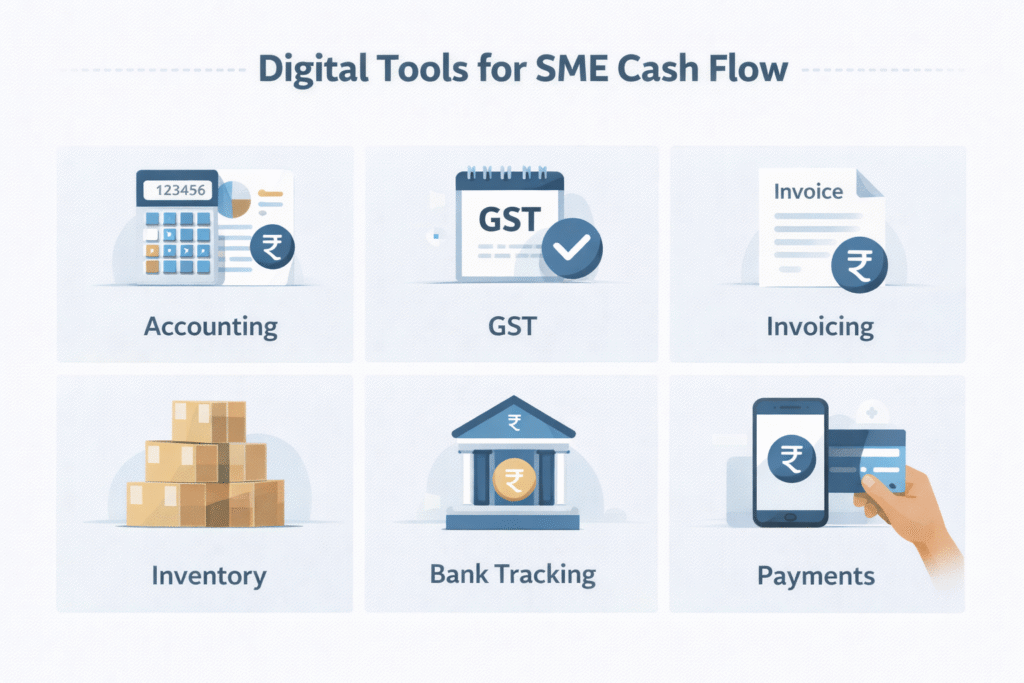
Here are 7 essential digital tools every SME should consider using to track cash flow and support long-term growth.
1. Accounting Software (The Foundation Tool)
This is non-negotiable.
Whether a business is small or growing, accounting software provides the single source of truth for finances.
What it helps with
Profit & loss visibility
Expense tracking
Balance sheet clarity
GST-ready reports
Bank reconciliation
Popular options for Indian SMEs
Tally
Zoho Books
QuickBooks
Businesses using proper accounting software:
Get faster loan approvals
Avoid compliance surprises
Understand real profitability
Without this, every other tool becomes less effective.
2. GST Filing & Compliance Tools
GST compliance directly impacts cash flow. Delays or mismatches can block input credits and raise red flags for lenders.
What GST tools help with
Timely return filing
Invoice matching
ITC tracking
Compliance accuracy
Commonly used tools
Clear
Zoho GST
GST modules inside accounting software
SMEs that stay GST-compliant enjoy:
Better liquidity
Stronger credibility
Faster financial evaluations
3. Bank Statement & Cash Flow Tracking Tools
Knowing how much money is in the bank is not enough. Businesses must know when money comes in and when it goes out.
What these tools help with
Daily inflow and outflow tracking
Identifying cash gaps
Understanding EMI affordability
Monitoring payment cycles
Many accounting platforms now offer:
Auto bank feeds
Cash flow dashboards
Alerts for low balances
Clear visibility reduces surprises and panic borrowing.
4. Invoicing & Receivables Management Tools
Delayed payments are one of the biggest reasons SMEs face cash stress.
Digital invoicing tools help businesses:
Issue invoices quickly
Track due dates
Send reminders automatically
Reduce follow-ups
Why this matters
Even profitable businesses fail when receivables are not controlled.
Popular invoicing solutions:
Zoho Invoice
Vyapar
Integrated accounting software
Businesses that track receivables well:
Improve cash cycles
Reduce dependency on emergency funding
Strengthen client discipline
5. Inventory Management Tools
Inventory locks up cash. Excess stock means blocked money. Low stock means missed sales.
Inventory tools help balance both.
What they help with
Stock level visibility
Fast-moving vs slow-moving items
Purchase planning
Cost control
Industries that benefit most:
Traders
Retailers
FMCG distributors
Textile and garment businesses
Integrated inventory tracking improves cash flow without increasing borrowing.
6. Payment Collection & Digital Payment Tools
Faster collections improve liquidity immediately.
Digital payment tools help businesses:
Collect money instantly
Reduce cash dependency
Track payment history
Improve transparency
Common tools
UPI & QR-based systems
Payment gateways
Business banking apps
When collections become faster, pressure on working capital reduces automatically.
7. Simple Budgeting & Forecasting Tools
Growth without planning creates stress.
Even basic forecasting tools help SMEs:
Plan expenses
Prepare for seasonal demand
Anticipate cash shortages
Decide when funding may be required
This doesn’t require complex software.
Even spreadsheet-based planning works if done consistently.
Businesses that forecast:
Borrow less urgently
Negotiate better
Grow with confidence
Why Digital Tools Matter Beyond Operations
Digital discipline is no longer just about internal efficiency.
It directly impacts:
Loan approval speed
Credit eligibility
Interest rates
Investor confidence
Expansion readiness
Lenders and finance partners increasingly rely on:
Clean data
Transparent records
Predictable cash flow
Businesses using digital tools are simply easier to support.
Where Sunrays Finance Fits In
At Sunrays Finance, funding decisions are based on how a business operates in reality, not just paperwork.
SMEs that use digital tools:
Get evaluated faster
Face fewer questions
Receive better-structured funding
Sunrays supports businesses that maintain clarity — and helps others move toward it.

Final Thought
Cash flow issues rarely appear overnight. They build slowly through poor visibility, delayed tracking, and lack of planning.
Digital tools give SMEs control — not complexity.
Businesses that track money well:
Borrow smarter
Grow faster
Sleep better
Technology doesn’t replace business instinct — it strengthens it.