Let’s Be Honest — Not All Debt Is Dangerous
If you ask any small business owner what they fear the most, many will say the same thing:
“Debt.”
But here’s the truth nobody tells SMEs:
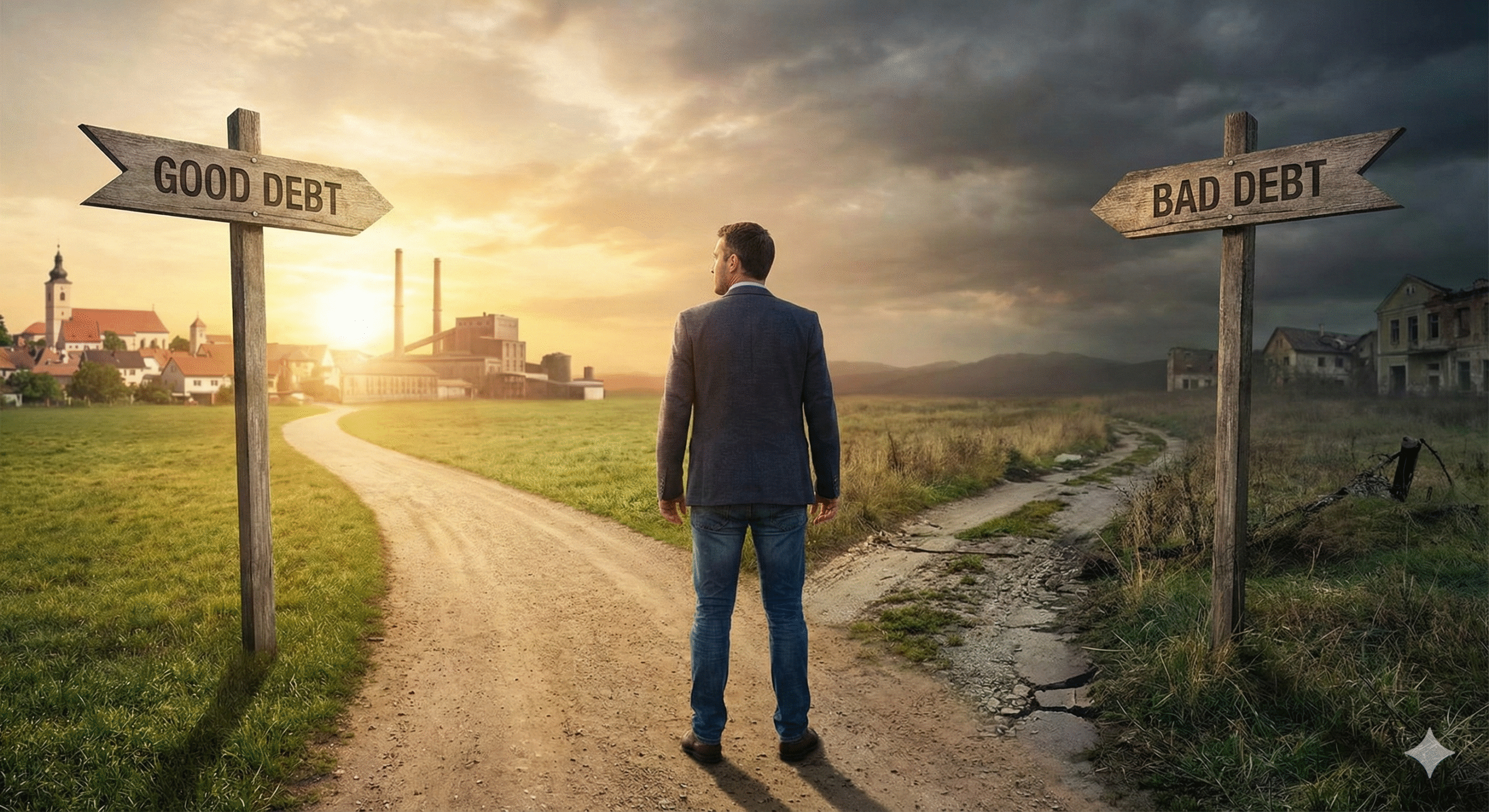
Debt is not the enemy. Wrong debt is.
In reality, good debt can help a business grow faster, manage cash flow better, and unlock opportunities that cash reserves alone can never match.
Bad debt, on the other hand, drains energy, blocks growth, and traps entrepreneurs in survival mode.
The secret to scaling smartly is understanding the difference.
This blog breaks down good debt vs bad debt in the simplest way — using real-world SME examples from Tamil Nadu and across South India.
1. What Exactly Is “Good Debt”?
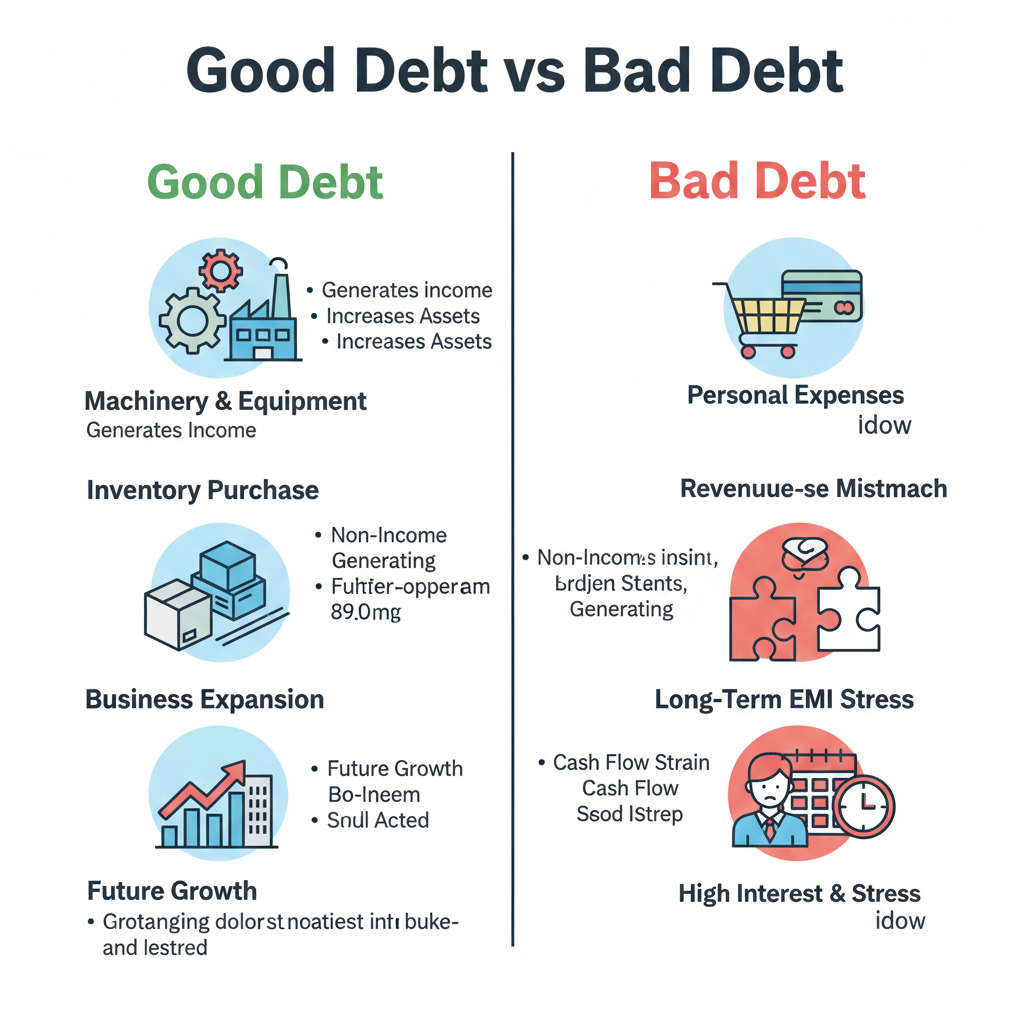
Good debt is money borrowed for activities that grow the business, increase revenue, or strengthen long-term operations.
In simple words:
Good debt pays you back — with profit.
Examples of good debt for SMEs
Buying a machine that increases production
Expanding a warehouse for larger orders
Purchasing inventory for festival season
Funding a bulk order with guaranteed margin
Upgrading equipment to reduce cost per unit
Hiring skilled staff that increases output
Good debt works with your business, not against it.
Why good debt is actually smart
You earn more than you repay
It improves cash flow
It helps you secure bigger clients
It builds long-term capacity
It prevents missed opportunities
It keeps your business competitive
A successful SME owner isn’t the one who avoids debt —
it’s the one who takes the right debt for the right reason.
2. What Is “Bad Debt”?
Bad debt is borrowing money for activities that don’t generate revenue, don’t help with growth, and don’t support the business cycle.
Bad debt drains the business instead of fueling it.
Examples of bad debt
Borrowing to cover personal expenses
Taking a long-term loan for a short-term need
Using collateral for temporary cash shortages
Borrowing more than your cash flow can support
Taking loans just because they are “low interest”
Borrowing without a clear plan for repayment
What makes debt bad is not the loan itself —
it’s the mismatch between the loan and the business purpose.
3. Real Stories: Good Debt vs Bad Debt in Everyday Business
Case 1: The Good Debt That Doubled Sales
Location: Koyambedu (Chennai)
Industry: Fruits & vegetables wholesale
A distributor received a large order from a supermarket chain.
To fulfill it, he needed ₹6 lakhs worth of inventory.
He took a short-term working capital loan, bought fresh stock, supplied on time, and secured a 3-month repeat contract.
Result: Profits covered the loan and gave extra margin.
Why this is good debt:
Revenue generated > Cost of borrowing.
Case 2: The Bad Debt That Led to Cash Crunch
Location: Coimbatore
Industry: Mobile accessories shop
The owner took a 3-year loan to cover temporary expenses and daily running costs — a short-term need funded with long-term debt.
This created:
High interest over time
Cash flow inconsistency
Zero return on borrowed money
Why this is bad debt:
Long-term EMI for a short-term issue = mismatch + stress.
Case 3: The Good Debt That Protected Supplier Relationships
Location: Tiruppur
Industry: Garments & hosiery
Client payments were delayed, but suppliers needed weekly settlement.
A rolling short-term credit facility bridged this gap.
Result:
Smooth workflow
No penalties
Better negotiation power
Faster delivery cycles
Why this is good debt:
It protected business rhythm and vendor trust.
Case 4: The Bad Debt That Became a Burden
Location: Salem
Industry: Hardware & paints store
The owner took a large collateral-backed loan simply because the interest rate was low.
But there was no clear business plan for using the funds.
Money sat idle → EMI drained monthly cash → Loan turned into a burden.
Why this is bad debt:
Borrowing without a purpose always backfires.
4. How to Identify Good Debt for YOUR Business
Here’s the simplest test Sunrays Finance uses when guiding SMEs:
Ask these 5 questions:
Will this loan help you earn more revenue?
Is the tenure aligned with the purpose?
Can your cash flow comfortably support the EMI?
Will this improve efficiency, speed, or capacity?
Is this a planned need — not an emotional decision?
If the answer is YES to most of these → it’s good debt.
If not → avoid it.
5. How to Avoid Bad Debt Completely
Here are the most common mistakes SMEs make — and how to avoid them.
❌ Mistake 1: Borrowing emotionally, not strategically
A festival offer, a low-interest pitch, a “take now, pay later” ad — avoid impulsive loans.
❌ Mistake 2: Using personal or family assets as collateral for short-term needs
Never put your home or land at risk for inventory purchases.
❌ Mistake 3: Mixing personal and business expenses
This is the fastest way to create cash confusion.
❌ Mistake 4: Taking a long-term loan for a fast-moving business need
This leads to overpayment and long-term EMI pressure.
❌ Mistake 5: Borrowing more than you need
Extra money in the bank tempts unnecessary spending.
6. The Golden Rule: Match the Loan With the Purpose
This one rule solves 90% of SME loan problems.
Short-term need → Short-term loan
Inventory
Raw materials
Seasonal orders
Vendor payments
Urgent expansion
Long-term need → Long-term loan
Machinery
Commercial vehicles
Real estate
Infrastructure
Branch expansion
When the loan tenure matches the business need, debt becomes a growth engine, not a burden.
7. Where Sunrays Finance Comes In
At Sunrays Finance, we help SMEs choose good debt intentionally, and avoid bad debt completely.
We focus on:
Working capital
Short-term opportunity funding
Cheque-based financing
Cash flow support
Collateral-free solutions
Transparent approval process
Our goal is simple:
Help SMEs make smart, sustainable, financially sound decisions.
Good debt grows your business.
Bad debt grows your stress.
We make sure you choose growth — always.
📞 7200005385
🌐 sunraysfinance.com