Most business owners associate growth with success.
More orders, more customers, and higher revenue usually signal that a business is moving in the right direction.
However, growth often creates a hidden challenge that many SMEs underestimate:
Working capital pressure.
In fact, many businesses struggle financially not because sales are low, but because they are growing faster than their cash flow can support.
Growth requires money long before revenue reaches the bank account. Without proper planning, even profitable businesses can face liquidity problems.
What Is Working Capital?
Working capital is the money needed to run daily business operations.
It helps businesses manage:
Inventory purchases
Supplier payments
Salaries
Rent and utilities
Transportation and logistics
Simply put, working capital keeps the business moving while waiting for customer payments to arrive.
Without sufficient working capital, operations can slow down even when sales remain strong.
Why Growth Creates Cash Flow Pressure
Many SMEs assume that more sales automatically improve financial health.
The reality is often different.
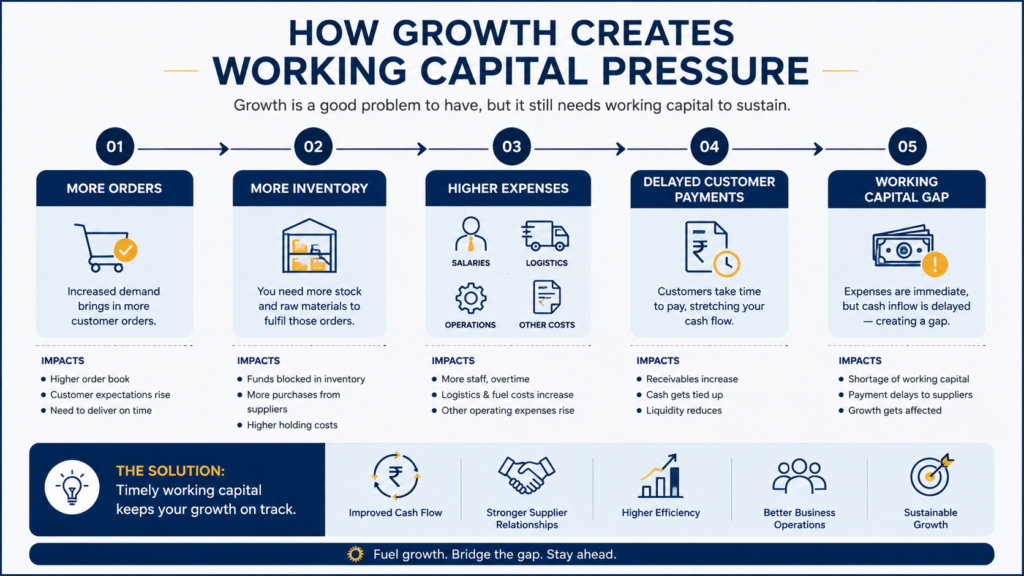
When a business receives more orders, it usually needs to:
Purchase additional inventory
Increase production
Hire staff
Spend more on logistics
These expenses happen immediately.
Customer payments may arrive 30, 60, or even 90 days later.
This gap creates working capital pressure.
The faster a business grows, the more important working capital planning becomes.
Common Growth Mistakes Businesses Make
Taking Large Orders Without Planning
A large order may seem like great news, but fulfilling it often requires significant upfront spending.
Without adequate liquidity, growth can strain operations.
Overstocking Inventory
Businesses often increase inventory to prepare for future demand.
While this can boost sales potential, it also locks up cash that could be used elsewhere.
Extending Credit Too Freely
Long payment terms may attract customers, but they can delay cash inflows and create liquidity challenges.
Profit and Cash Flow Are Not the Same
One of the biggest misconceptions in business finance is assuming profit equals available cash.
A company may show strong profits on paper while struggling with day-to-day expenses.
For example:
A business invoices ₹50 lakh worth of sales.
If customers pay after 60 days, the company still needs cash to manage operations during that period.
This is why many growing businesses experience financial pressure despite healthy revenue figures.
Cash flow—not profit—keeps a business running.
Warning Signs of Working Capital Stress
Business owners should watch for these early indicators:
Delayed supplier payments
Frequent cash shortages
Difficulty maintaining inventory levels
Stress around salary dates
Reliance on emergency funding
Missing growth opportunities due to lack of liquidity
Identifying these signs early allows businesses to take corrective action before problems become serious.
How to Manage Working Capital More Effectively
Improve Receivables Collection
Faster collections improve cash flow immediately.
Regular follow-ups and clear payment terms can reduce delays.
Monitor Inventory Carefully
Maintain enough stock to support sales without unnecessarily locking up cash.
Forecast Cash Flow
Tracking expected inflows and expenses helps businesses prepare for future funding needs.
Plan Funding Ahead of Growth
The best time to arrange working capital support is before pressure builds, not after.
Where Sunrays Finance Fits In
At Sunrays Finance, we work with businesses that are growing but experiencing temporary cash flow gaps.
Whether it’s inventory funding, working capital support, or managing seasonal demand, the goal is to help businesses maintain momentum without disrupting operations.
The right financial support can help businesses focus on growth while managing liquidity more effectively.
Final Thought
Growth is exciting, but growth without working capital planning can quickly become stressful.
The most successful businesses are not always the ones with the highest sales. They are often the ones that manage cash flow most effectively.
Working capital may operate behind the scenes, but it plays a critical role in determining whether growth becomes sustainable or overwhelming.
The smartest business owners plan for growth before the opportunity arrives—and that starts with understanding the importance of working capital.