

For most business owners, more orders are always welcome.
After all, every entrepreneur works hard to attract customers, increase sales, and grow revenue.
But growth comes with a challenge that many businesses don’t expect:
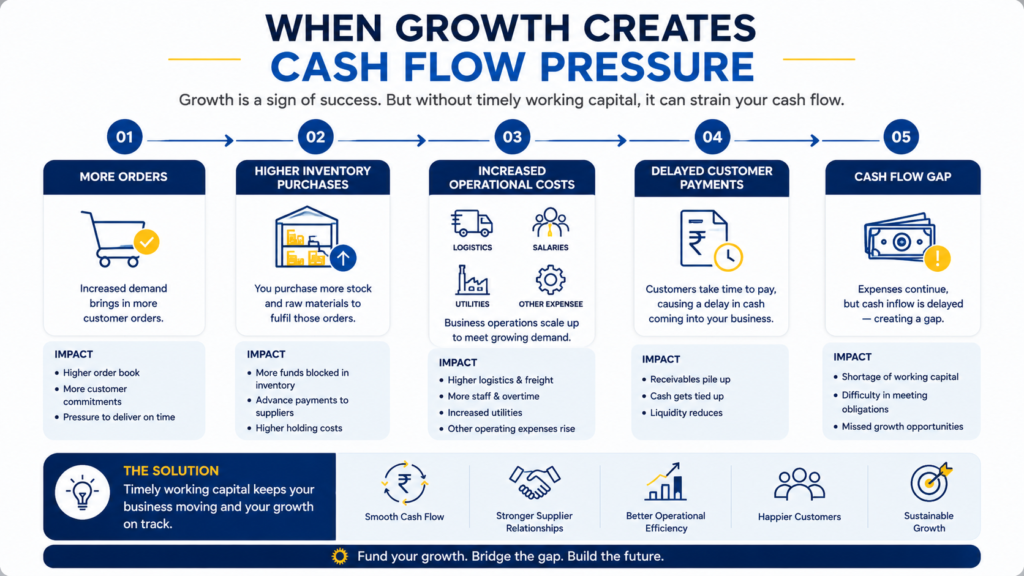
More orders often require more cash before they generate more cash.
This is why some businesses experience financial pressure during their busiest periods. Sales increase, customers keep coming in, and order books look healthy—yet cash flow becomes tighter than ever.
Understanding this growth paradox is essential for any business that wants to scale sustainably.
Why Growth Can Create Financial Pressure
Many businesses assume that rising sales automatically improve financial health.
In reality, growth often increases expenses long before payments arrive.
When order volumes increase, businesses may need to:
- Purchase more inventory
- Increase production
- Hire additional staff
- Arrange transportation and logistics
- Pay suppliers sooner
While these costs occur immediately, customer payments may arrive weeks or months later.
This creates a temporary cash flow gap.
The larger the growth, the larger the gap can become.
The Order Book Looks Full, But Cash Feels Tight
This situation is surprisingly common among SMEs.
A business may have:
- Strong demand
- Healthy sales figures
- Multiple customer orders
Yet still struggle to manage day-to-day expenses.
Why?
Because revenue and cash flow are not the same thing.
An invoice may be raised today, but actual payment could arrive after 30, 60, or even 90 days.
Until then, the business must continue funding operations.
Growth without liquidity planning can quickly create pressure.
Common Situations That Trigger Cash Flow Stress
Large Customer Orders
A large order can be a major opportunity.
However, fulfilling it may require:
- Additional inventory
- Higher production costs
- Increased manpower
Without sufficient working capital, fulfilling the order itself can become challenging.
Seasonal Demand
Retailers, textile traders, distributors, and food businesses often prepare for festive or seasonal demand.
Inventory purchases typically happen before revenue is generated, creating temporary cash requirements.
Expansion Activities
Opening a new branch, entering a new market, or increasing capacity requires investment before returns begin to appear.
Warning Signs That Growth Is Outpacing Cash Flow
Business owners should monitor for signs such as:
- Delayed supplier payments
- Difficulty maintaining inventory levels
- Frequent short-term borrowing
- Cash shortages despite strong sales
- Increased stress around payroll and operating expenses
These warning signs often indicate that growth is moving faster than available working capital.
Recognizing them early can help prevent larger financial challenges.
How Successful Businesses Manage Growth
The most successful businesses do not wait for cash flow problems to appear.
They prepare for growth in advance.
Forecast Cash Flow
Before accepting large orders or expanding operations, estimate:
- Expected expenses
- Collection timelines
- Working capital requirements
Monitor Receivables
Delayed customer payments are one of the biggest causes of liquidity pressure.
Regular follow-up and clear payment terms help improve cash flow.
Plan Inventory Carefully
Inventory should support demand without locking excessive amounts of cash.
Arrange Funding Before It Becomes Urgent
Businesses often have more options when they seek funding proactively rather than reactively.
Growth Is Good—But Sustainable Growth Is Better
Business owners often focus heavily on increasing revenue.
While revenue growth is important, sustainable growth requires:
- Strong cash flow management
- Financial discipline
- Working capital planning
- Operational efficiency
Businesses that balance growth with liquidity are often able to scale more confidently and consistently.

Where Sunrays Finance Fits In
At Sunrays Finance, we regularly work with businesses that are experiencing growth-related cash flow pressure.
Whether it’s inventory funding, seasonal demand preparation, or short-term working capital support, the objective is to help businesses maintain momentum without disrupting operations.
Growth opportunities should strengthen a business—not create unnecessary financial stress.
The right funding at the right time can help bridge temporary gaps and support long-term success.
Final Thought
Growth is one of the best problems a business can have.
But growth still needs planning.
More orders often mean more expenses before more revenue arrives. Without proper working capital management, even successful businesses can experience liquidity pressure.
The businesses that scale successfully are not simply the ones that win more orders.
They are the ones that prepare financially before those orders arrive.
Because sustainable growth is not just about selling more.
It’s about having the resources to support that growth every step of the way.3