

The business world is changing rapidly.
Markets are moving faster, customer expectations are evolving, and competition is becoming more intense across almost every industry.
For SMEs, growth opportunities remain strong. However, so do the challenges.
In this environment, one factor is becoming increasingly important:
Financial discipline.
While sales, marketing, and operations will always matter, businesses that manage their finances carefully are often better positioned to handle uncertainty, seize opportunities, and grow sustainably.
In 2026, financial discipline is no longer just a finance department responsibility.
It is becoming a competitive advantage.
What Financial Discipline Really Means
Many business owners associate financial discipline with cutting costs.
In reality, it is much broader than that.
Financial discipline means:
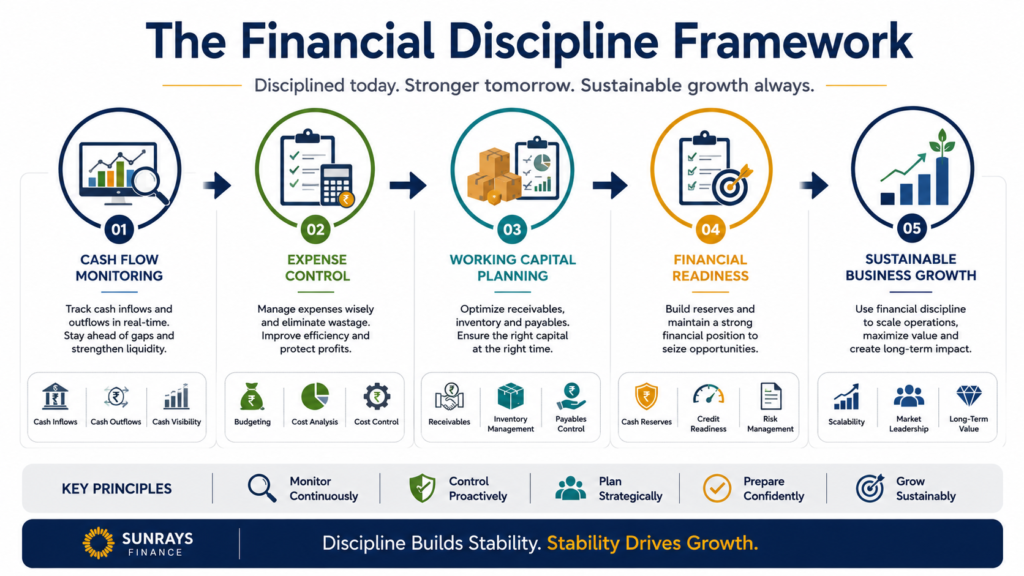
- Managing cash flow carefully
- Monitoring expenses regularly
- Planning working capital requirements
- Reviewing business performance consistently
- Making informed financial decisions
The goal is not simply to spend less.
The goal is to use financial resources more effectively.
Growth Without Discipline Can Create Problems
Growth is often viewed as the ultimate business objective.
However, growth without financial discipline can create pressure.
When businesses expand, they often face:
- Higher inventory costs
- Increased staffing expenses
- Larger supplier commitments
- Greater operational complexity
Without proper planning, growth can strain cash flow and create unnecessary stress.
This is why many successful SMEs focus on financial discipline before pursuing aggressive expansion.
Cash Flow Has Become More Important Than Ever
One of the biggest lessons many business owners learn is that profitability and liquidity are not the same thing.
A business may generate strong sales and healthy profits.
Yet if customer payments are delayed or expenses rise unexpectedly, cash flow can become strained.
Businesses that monitor cash flow regularly are often able to identify issues early and respond before they become serious problems.
In today’s environment, cash flow visibility is essential.
Planning Creates Stability
Businesses that operate without financial planning often rely on guesswork.
This can lead to:
- Unexpected shortages
- Delayed supplier payments
- Missed opportunities
- Operational disruptions
Financially disciplined businesses take a different approach.
They regularly forecast:
- Expected revenue
- Upcoming expenses
- Working capital requirements
- Seasonal business needs
Planning helps reduce uncertainty and improve decision-making.
Financial Discipline Supports Faster Decisions
An interesting benefit of financial discipline is speed.
Businesses that maintain accurate records and understand their financial position can often make decisions more quickly.
They know:
- How much inventory they can purchase
- Whether they can support expansion
- How much working capital they require
- What risks they can realistically manage
Better information leads to faster and more confident decisions.
Why SMEs Need Flexibility
The business environment rarely follows a perfect plan.
Customer behavior changes.
Market conditions shift.
Unexpected opportunities appear.
Financial discipline helps businesses remain flexible during these situations.
Strong financial management creates options.
And businesses with options are often better positioned to adapt.
Common Habits of Financially Strong Businesses
Many successful SMEs share similar financial habits:
- Reviewing cash flow regularly
- Tracking receivables closely
- Managing inventory carefully
- Monitoring expenses consistently
- Planning funding requirements in advance
These habits may seem simple.
However, over time they can create significant advantages.
Financial Discipline Helps Businesses Capture Opportunities
Many opportunities require quick action.
A supplier discount.
A large customer order.
A seasonal demand increase.
A new market opportunity.
Businesses that maintain financial discipline are often better prepared to respond.
Instead of reacting to financial pressure, they can focus on growth.

Where Sunrays Finance Fits In
At Sunrays Finance, we work with businesses that understand the importance of preparation and financial stability.
Whether the requirement involves working capital support, inventory funding, seasonal demand planning, or managing temporary liquidity gaps, the objective is to help businesses maintain momentum while strengthening financial readiness.
Because sustainable growth is built on strong financial foundations.
Final Thought
In 2026, financial discipline is no longer optional.
It is becoming one of the most important characteristics of successful businesses.
Markets will continue to change.
Competition will continue to increase.
Opportunities will continue to appear unexpectedly.
Businesses that manage cash flow carefully, plan ahead, and make informed financial decisions will often be in the strongest position to grow.
Because while growth creates opportunity, financial discipline creates the ability to sustain it.